
Overview
Palestinian youth are asking how the popular democratic uprisings in Arab countries can inform their national struggle. They launched the first intifada in 1987 and fueled the second intifada in 2000, and they believe they have a role to play in the Arab youth uprisings calling for democratic changes. Palestinian political and civil society organizations are also seeking answers to this question. Al-Shabaka policy advisor Jamil Hilal argues in this policy brief that the answers cannot be found abroad. Rather, he contends that they can only be found in an understanding of the Palestinian condition, which differs significantly to that of Arab states. Hilal identifies some of the key principles necessary for a “Palestinian spring,” including a reunified body politic with representative mechanisms and political and intellectual pluralism.
The Palestinian Condition
Palestinians are the only Arab people without a state. Each of its dispersed parts faces different circumstances including settler colonialism, stifling siege, national and racial discrimination, refugee status, and Diaspora. Thus, the national cause is inseparable from the democratic imperative. Beginning in 1993, the Oslo Accords institutionalized the fragmentation of the Palestinian people. As a result, many issues need analysis. This includes a post-Oslo national agenda; the lack of a unified national leadership endorsed by the majority of Palestinians; the absence of overarching legislative and executive institutions; the splits in the national movement.
Since Oslo, the institutions of the Palestine Liberation Organization (PLO) have been marginalized and effectively absorbed into the Palestinian Authority (PA), the self-governing body with limited powers established in 1994. Meanwhile, the PLO’s sectoral and professional associations -– the mass and trade union organizations of students, women, workers, engineers, teachers, writers and journalists, among others –- gradually lost the role they used to play of engaging all parts of the Palestinian people in the national struggle for liberation. The institutions and mechanisms that used to connect the Palestinian national movement to the Palestinian people in the 1970s and 1980s gradually eroded. The result has been the fraying of the fabric that used to bind the struggle for national, democratic and human rights.
Reconstituting the Palestinian National Movement
The Palestinians’ aspirations for self-determination, liberation, and democracy will remain unfulfilled unless they can reconstitute their national movement. How can this be rebuilt on representative foundations, re-engaging its constituents in historic Palestine and beyond? A review of the PLO’s experience during the first three decades of its existence suggests some key issues that must be taken into account so as to move forward.
Re-unifying the Palestinian Body Politic
All parts of the Palestinian people inside historic Palestine and beyond need to be represented in a way that relates to the specificities of each Palestinian community. In other words, the Palestinian National Council (PNC) should encompass the immediate demands as well as the socio-economic and political challenges facing each of the major three different Palestinian components. The Palestinian citizens of Israel are working against racial discrimination and for national rights as a minority. Meanwhile, Palestinians in the West bank and Gaza Strip are struggling against the settler colonial occupation of their land and the siege. Similarly, Palestinians in the Diaspora are seeking to keep alive their right of return to their homeland and to end government security surveillance of the refugee camps in the countries where they live, as well as to have their civil rights acknowledged.
These distinct sets of rights compose the elements of the struggle of Palestinians for self-determination and freedom. It is in the interest of the entire Palestinian people that the occupation should end, that discrimination should cease, and the right of return be realized. Taken together, the fulfillment of these rights would address the historic injustice inflicted on the Palestinians. The only time when conflict arose is when one part of the Palestinian people acted to address its own immediate demands, reducing the Palestinian cause to an end of occupation of territories occupied in 1967. This is why many felt that the Oslo Accords served to fragment the Palestinian people by ignoring their history prior to 1967.
Representative Mechanisms
The mechanisms for democratic representation present a challenge. How each segment of the Palestinian people can participate in an election to choose representatives to best address their interests in the PNC must be studied carefully, evaluating the best and most appropriate historical examples. This could range from direct elections, as in the occupied Palestinian territories for the Palestinian Legislative Council to Internet voting in the Diaspora, to other ways that can be devised and agreed upon.
There will be greater challenges among refugees and exiles as well as for the Palestinian citizens of Israel. Although, for example, the records of United Nations Refugee and Works Agency (UNRWA) can be used among refugee communities in Arab countries in drawing lists of those eligible to vote and stand for elections in the Diaspora, would Palestinians in Jordan be willing to identify themselves as Palestinians to vote, at a time when Jordan is beginning to withdraw citizenship from Jordanians of Palestinian origin? Palestinians citizens of Israel would also face serious repercussions, if they take part in electing their representatives to the PNC. However, other ways could be found to make their views known. In the past, they stated their needs and demands and these were taken into account without their having to be official members of the PNC.
It is worth recalling that the PLO’s Basic Law does state that the members of the PNC should be directly elected. However, the PNC relied largely on the quota system, as did some of the mass organizations, apportioning seats between the political factions according to a set quota – something along the lines of Fatah having half the seats plus one in the secretariat, with the rest distributed to members of other groups. The only exception was the Palestinian writers’ and journalists union where Fatah did not have a majority and where the general secretary was independent.
The quota system served to paralyze the PLO’s institutions and limit the healthy competition and dynamics needed to ensure real representatives of Palestinian constituencies, and that might have been achieved using other methods such as proportional representation. Direct elections were carried out in some branches of the students’ union (as is still the case in the universities of the West Bank and Gaza Strip) and occasionally in the branches of other unions, although those outside the occupied Palestinian territories were forced to conform to the quota system. These elections were also used as a way of sidestepping host government concerns about the Palestinian status of their residents – as well as Arab governments’ fear that their own people might demand elections. In theory, the democratic wave ushered in by the Arab revolutions should make it easier for Palestinian communities to hold direct elections in host countries.
Guaranteeing Political and Intellectual Pluralism
No Palestinian political or intellectual contribution should be excluded from the PNC. This used to be the case within the PLO pre-Oslo, and political viewpoints ranged from left to right and from Islamist to secular. This was one of the PLO’s strengths: every Palestinian had the right to have their voice heard and express views and opinions. All the political organizations of the PLO (including those of the left, Fatah and the pan-nationalists) had their own publications, autonomous civic and military organizations, security apparatuses, and ideological standpoints.
Of course, pluralism doesn’t mean that each political party can do what it likes; they must function within the charter. In the pre-Oslo PNC, there were lengthy meetings to decide on national issues in order to reach a consensus. Each of the components of the Palestinian people must take into account the interests of the other components. For example, if a decision is made to opt for armed resistance, this should specify the areas where it can be carried out (e.g. areas under direct Israeli military occupation). There have to be certain restrictions on action, including those provided by international law, which recognizes the right of occupied peoples to resist but bars attacks against civilians whether by states or individuals.
The two authorities operating since 2007 in the West Bank and Gaza have become less tolerant of freedoms of speech, association and expression than used to be the case. Both have acted to restrict the rights of those sympathizing with the party in opposition (Fatah sympathizers in the Gaza and Hamas sympathizers’ on the West Bank). It is hoped that the recent Hamas-Fatah rapprochement will re-affirm and strengthen democratic institutions and redirect energies towards the struggle for self-determination.
Previously, PNC meetings had to be held annually and the Executive Committee was elected every three years. However, the last legitimate meeting (i.e. held according the basic law of the PLO) was the one in Algiers in 1988 that declared the Palestinian state. The enforced paralysis of the PNC violates the PLO’s Basic Law. Those who bet on the PA becoming a Palestinian state should critically examine the consequences, particularly the marginalization of the PLO, the fragmentation of the Palestinian people, the continued colonization of the West Bank and East Jerusalem, and the siege of the Gaza Strip. Given the broad agreement between Fatah and Hamas to end the division within the national movement, it is hoped that a national strategy will be thought through that does not pin false hopes on the United States, or rely on pointless negotiations without a clear end result and without a framework grounded in international legitimacy.
The push for a declaration of a Palestinian state in September will just create another façade
There are also dangers. The PLO now has observer status at the UN, the only national liberation organization to have that status. What will happen to the PLO when the UN recognizes a Palestinian state, one that is under occupation without sovereignty over territory, borders, skies, and without the necessary aspects of statehood, and that jeopardizes the right of return? This is exactly what Israeli Prime Minister Benyamin Netanyahu is seeking: a state with temporary borders.
Ensuring Democracy
The democratic rights of the Palestinians must be respected. This includes the right to vote and run for office; freedom of expression, opinion, and association; and regular elections for political and union leadership. Democratization is especially important to revitalize and rebuild the mass organization, trade and professional unions. If they are to be really effective they need genuine grassroots participations and not simply be dictated to by political parties that impose the quota system. Otherwise, Palestinians will lose the most powerful mechanism of linking them horizontally, that is, across borders, ideologies, and socio-economic status.
An example might be useful here. In the wake of Israel’s invasion of Lebanon in 1982, the General Union of Palestinian Writers and Journalists suffered from a political split that was brought about first by a split within Fatah in 1983, then by the division of the PLO into two major camps. Considerable efforts were made to reunify the writers’ and journalists union as a step toward reunifying the PLO. A successful writers’ union conference was held in Algiers in 1987, which was also used to test the feasibility of holding a PNC meeting that would reunify Palestinian ranks. The latter was reconvened shortly afterwards with the participation of all political parties, signaling the reunification of the national movement.
Inclusive and Secular Foundations
Palestinians must ensure that the national movement is grounded in secular and inclusive foundations, so as to encourage debate, accountability, and constructive opposition.1 The Arab revolutions and uprisings can be a source of strength for the Palestinians in developing these foundations. Indeed, there are new discourses among Islamist movements. Some, including members of the Muslim Brotherhood in Egypt, have come to accept the idea of a civil state instead of an Islamic state. Tunisians are discussing a secular constitution and 50 percent representation of women in national institutions and political parties. This is where the Arab revolutions can be a source of strength for the Palestinians.
Revisiting the Charter
So as to ensure that the aspirations of the entire Palestinian people are addressed, it may be necessary to review the Palestinian National Charter. It was written in the 1960s in a completely different world and time, especially in terms of its language and the present-day emphasis on notions of transparency, democracy, human rights and citizenship. The Cold War is over, and Palestinians need a document that communicates to the young and that they can relate to.
Such a revision would involve transcending the Oslo Agreements, which contributed to the fragmentation of the Palestinian people and the marginalization of the PLO and provided cover for Israel’s settler colonialist policy. Many Palestinians, including political leaders, believe this should be done. If the PLO is rebuilt, it should have headquarters outside Palestine, with the PA becoming one of its departments confined to “municipality type” functions (health, education, sewage, etc). It should have no political functions. Indeed, part of rebuilding the PLO would necessitate re-defining the PLO-PA relationship and clarifying their relations and responsibilities. This is not because the PA is on the threshold of becoming a state – far from it – but in order to free the national movement from Israeli pressures, constraints, and humiliation and from the blatant bias of the United States and the European Union toward Israel.
Some may fear that aid may be cut off and the 160,000 PA employees and their families will suffer as a result. This is why Palestinians need a strong PLO. The PA’s employees would have to be the responsibility of the PLO. But one cannot hold the basic rights of the Palestinian people hostage to the PA’s employees. Arab countries can easily make up for any cuts in the aid the PA gets from the West. As for Israel, let it shoulder the burdens of its occupation, instead of having, as it does now, the cheapest occupation in history, to quote PA President Mahmoud Abbas.2
To sum up, Palestinian trade unions and professional associations must be rebuilt so as to revive the structures that reunify the Palestinian body politic, facilitate its roots in healthy social and cultural development, and reconstitute the national movement. This is the priority and all other issues are secondary.
A New National Movement or a Renewed PLO?
The question is often posed as to whether it is preferable to rebuild the PLO’s institutions or to build a new movement. In theory, either option could work as long as it incorporates the principles outlined above. The reality is different. Any attempt to establish a new national movement would rouse political and factional fears, given the geo-political split that has resulted in one government in Gaza and another in the West Bank since 2007. Although both governments function under occupation and siege, they have agreed in late April 2011 to proceed to end the division and, hopefully to discuss with the whole body of the national movement a common strategy to confront Israeli policy, instead of using their respective security apparatuses to control the Palestinian citizens in their domain.
Any call to sidestep the PLO in favor of a new national movement would aggravate an already acute polarization and lead to increased reliance on external centers of power with private agendas. It is therefore preferable to focus on rebuilding the PLO despite the stagnation and marginalization it has suffered. The arguments in favor of this approach include:
- There is a national consensus to rebuild the PLO and make its institutions inclusive, even there is as yet no agreement on a timetable and implementation mechanisms.
- The PLO has a legacy of militant struggle that can be built upon. It is important to revive and celebrate this legacy especially since many Palestinian youth know very little about it. They have no first hand knowledge of the rise of the Palestine resistance in the late 1960s and 1970s in the Diaspora and within Israel or of the steadfastness of the resistance movement in Lebanon in the face of Israeli attacks. Some were too young or not even born during the first intifada.
- The PLO is recognized internationally and by Arab countries as “the sole, legitimate representative of the Palestinian people.” Obtaining Arab and international recognition for a new movement would certainly not be easy, to say nothing of securing wide-scale Palestinian recognition.
- The PLO and its factions played a pivotal role in supporting and organizing the movement’s sectoral federations, trade unions and professional associations. These in turn secured a broad social and popular base for the PLO and mobilized the mass of Palestinians in the national struggle, forging organizational linkages between Palestinian communities despite their geographic separation. When PLO institutions were marginalized, these associations were likewise transformed into ineffective, unrepresentative, and nationally insignificant bureaucratic structures, unable to speak up for the interests of the social segments they were supposed to represent.
Conclusion
The main message from the Arab uprisings to the Palestinian people is that the quest for national liberation, democracy, and social justice is intertwined. The first step must be to rebuild the Palestinian national movement on democratic and inclusive grounds that preserve the unity of the Palestinian people. In weighing whether Palestinians should seek to rebuild the PLO or attempt to build a new national movement, it is clear that rebuilding the PLO would be the most effective path to follow despite its moribund state. The democratization taking place in the Arab world is of great value and strength to the Palestinian struggle, and the Palestinian leadership need to support and be inspired by it.
In rebuilding the national movement, Palestinians must realign the national and social agenda and engage with diverse Palestinian communities. They must account for and incorporate the social, democratic and national struggles appropriate to the conditions of each community, and derive inspiration from the values of freedom, equality, social justice and the right to self-determination.
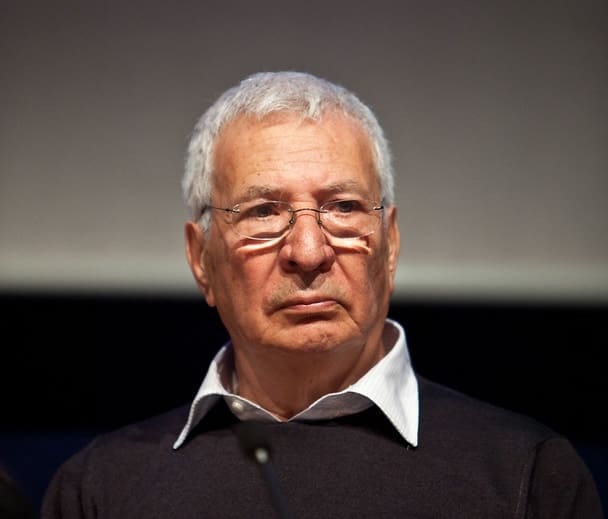
Jamil Hilal is an independent Palestinian sociologist and writer, and has published many books and numerous articles on Palestinian society, the Arab-Israeli Conflict, and Middle East issues. Hilal has held, and holds, associate senior research fellowship at a number of Palestinian research institutions. His recent publications include works on poverty, Palestinian political parties, and the political system after Oslo. He edited Where Now for Palestine: The Demise of the Two-State Solution (Z Books, 2007), and with Ilan Pappe edited Across the Wall (I.B. Tauris, 2010).