



Overview
In this policy brief, Al-Shabaka Policy Advisor Randa Farah examines the UNRWA-refugee relationship based on her anthropological research in Jordan.1 She argues that the Agency took on an exaggerated role that mirrored that of a welfare government-in-exile, especially before the Palestine Liberation Organization (PLO) assumed leadership in the mid-sixties and after it, de facto if not de jure, turned its back on the refugees by signing the Declaration of Principles (DoP) with Israel in 1993. She proposes that the United Nations Relief and Works Agency (UNRWA) is a unique humanitarian organization, but is neither static and homogeneous, nor is it apolitical. Rather, Farah contends that it is a site of multiple and sometimes contradictory interests. She concludes that in the current political climate, UNRWA’s presence is significant mainly because it attests to the international responsibility toward the Palestinian refugees, and as a signatory to UNGA resolution 194 (III), their right of return.
UNRWA in Jordan
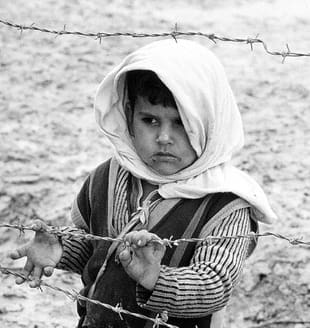
UNRWA is one of the largest and longest-standing humanitarian organizations. Established on 8 December 1949 shortly after the Palestinian Nakba, or catastrophe, in which over 750,000 Palestinians were expelled by or fled from Zionist militias during the establishment of the state of Israel. Due to Israel’s repeated rejection of the refugees’ right of return UNRWA‘s mandate has been regularly renewed. Currently, it provides basic services in the areas of education, health, relief and social services to 4,766,670 million registered Palestine refugees in the Middle East.2 In Jordan, the host of the largest refugee population outside of historic Palestine, UNRWA operates in ten camps accommodating 341,494 registered refugees, or 17.2 percent of the 1,983,73 registered refugees in the country.3
It is ironic that the international community — through the United Nations High Commissioner for Refugees (UNHCR) — is promoting repatriation as the privileged durable solution for refugees worldwide, but has stood impotent in facilitating the repatriation of Palestinian refugees, or in pressuring Israel to abide by Refugee Law.4
When UNRWA began its work in May 1950, it forged agreements with host-states, which furnished the legal framework for its operations. On occasion, UNRWA informally consulted with refugees on practical matters, usually with camp leaders, many of them former village heads. The absence of an effective Palestinian political body that could mobilize and represent refugees as a collective national group, combined with repressive state policies, catapulted UNRWA to center stage. Taking on a unique and visible role, it assumed many of the functions of a welfare government. UNRWA also acted as an employer in the public sector, and hired refugees in various positions. Many of the employees lived in the camps, giving refugees a sense that it was “theirs.” However, Palestinian and local employees within the Agency remain well-aware of the inequities and gap between them and international staff who have greater decision-making powers, are more closely linked to western funders with different agendas for the Agency, and command higher salaries and benefits.
By the late 1960s, the PLO developed its own institutions and constituency in Jordan. With few exceptions, the relationship with UNRWA during this period was characterized by mutual accommodation. Despite the fears of Palestinian refugees, UNRWA’s humanitarian or “developmental” mission failed to placate the Palestinian national struggle as some Palestinians feared. As a liberation movement, the PLO granted the camp residents dignity and a collective political voice; but PLO patronage, especially membership in Fatah, became just as important as having connections with UNRWA, useful to guarantee a job, education, or to receive financial and material support. For a while, the PLO overshadowed or competed with UNRWA in providing services to refugees, “representing” their predicament, and even in financial assistance to some families in camps, but its golden age in Jordan was short-lived, ending with the organization’s expulsion from Jordan by 1971.
UNRWA, the PLO and the aftermath of Oslo
Prior to the emergence of the PLO, refugees had spontaneously rejected integration or resettlement plans since their expulsion. For example, most refugees insisted their status as refugees was temporal, and adamantly refused plans to improve infrastructure in camps, or even to replace the flimsy “zinc” roofs of their humble shelters with more durable materials. By the mid-sixties, the rise of the PLO coincided with the opening of Gulf markets. Refugees, many of them graduates of UNRWA’s training centers, now turned their attention to the oil-rich Gulf countries seeking job opportunities. This new sense of economic empowerment, and the growing strength of the PLO, generated a spirit of political confidence that detracted from UNRWA’s clout and status as the main “welfare” institution, but not from its important material support for many impoverished refugee families. The PLO’s presence emboldened refugees to oppose the reduction of their political aspirations and legal rights into a humanitarian cause. In spite of its ousting from Jordan and regrouping in Lebanon in 1970-71, the PLO’s influence endured until Israel destroyed its infrastructure in 1982.
In 1987, Palestinians ignited the first intifada in the Occupied Palestinian Territories (OPT), and signaled the growth of new political movements that began to challenge the PLO’s hegemony, primarily the Islamic Resistance Movement (Hamas). The PLO’s already weakened condition was exacerbated, when in 1993, it signed the DoP and established the Palestinian Authority (PA), representing a radical shift in official national politics, and the beginning of an acute schism in national consensus.5
The DoP and subsequent agreements, generally known as the Oslo “peace process,” alienated refugees of the 1948 Nakba, because the US–Israeli framework that underpinned these agreements was not anchored in international law and neglected UNGA Resolution 194 (III). The PLO’s signature on these agreements was viewed as perfidious and the shirking of the organization’s responsibility toward the refugees. Once again, UNRWA, despite absence of a clear international protection mandate and with a shrinking budget, stood as the only organization responsible for refugees in host-countries. Therefore it was particularly unsettling for refugees and local UNRWA employees that shortly after the signing of the DoP, the Commissioner General announced that, in light of the “peace process,” UNRWA would be preparing to dissolve itself within a five-year period.6 The political turbulence was compounded by the Agency’s decision to make available funding for a Peace Implementation Programme (PIP) aimed at helping the PA to build-up its infrastructure.7
The PIP revealed that UNRWA is not beyond the political sphere, but deeply entangled in changing local, national and international political configurations. Indeed, UNRWA’s public support of the Oslo political negotiations, its plans at the time to “dissolve” itself, and the steps it took to help the PA build “state” institutions, prior to the resolution of the refugee problem, exposed the inextricable links between the humanitarian and political spheres.8 Meanwhile, UNRWA employees I interviewed during this period were quite pessimistic about their future. They noted that their transfer to public sector and government jobs in Jordan would be difficult and would constitute a rupture with the familiar Palestinian environment that had been created within UNRWA after so many decades.
Oslo disabled the PLO and voided it of authority and political effectiveness by fragmenting Palestinian national institutions, and channeling the resources and political focus to the “inside” – the Palestinian areas under the PA — at the expense of the refugees. Despite lip-service to the “right of return,” the core and most critical issue in the national struggle, the PA buried it under the rubric of the “right to self-determination” which key figures in the PA and their supporters interpreted as the right to an independent state on the West Bank and Gaza, but not the right of refugees to an actual return to places of origin in historic Palestine.
This injected a pessimistic political mood, especially among refugees living in exile. UNRWA, however, has survived as a uniquely positioned institution; one that symbolizes the unresolved political fate of the 1948 refugees and their ignored and de facto annulled right of return by the principles that governed the Oslo agreements.
In the context of the broader humanitarian regime, UNRWA’s relationship with the Palestine refugees has unique features, of which three stand out. First, the UN which established the Agency, is complicit in the creation of the Palestinian refugee problem, not least its Partition Plan (UNGA Resolution 181) which was used by leaders of the Zionist movement to justify the ethnic cleansing of Palestine, albeit by distorting the terms in the articles of the Resolution and expanding beyond the territory assigned for the majority Jewish state. Secondly, the UN accepted Israel into the organization as a member state prior to implementing the refugees’ right of return. Thirdly, unlike other international organizations, the vast majority of UNRWA’s employees are Palestinian, although less than 200 international staff occupy executive positions and have more power and authority than local staff.
In the last few years I have been conducting research in the Sahrawi refugee camps in Algeria, where the relationship between humanitarian agencies and the Sahrawi refugees differs from the UNRWA-refugee relationship. The Polisario, the Sahrawi national liberation front, administers the camps through popular committees whereby Sahrawi refugees take charge of camp organization, and the distribution of international aid. This model has been enabled by the host state, which recognizes the Sahrawi Arab Democratic Republic (SADR) as a sovereign state and allows it to operate as such, within the confines of camp boundaries.9 Thus, the Polisario acts as a buffer against the direct intervention and hegemony of international aid institutions. In fact, the “camps” are administered as wilayas or provinces of a nation-state on a stretch of territory that is temporarily “borrowed” from Algeria, and refugees are citizens of SADR, which has a Constitution and governmental institutions. The success of the Sahrawi model may also be attributed to the fact that the Polisario was formed prior to the 1975 war that led to the displacement of the Sahrawi refugees, which meant that from the very beginning; it took a leadership role in establishing and managing the camps.
In contrast, the PLO emerged seventeen years after the Nakba and did not enjoy similar support from Arab host-states. Moreover, there was no unified PLO strategy pertaining to camp-refugees, but factional politics and practices. Refugee committees have always existed in camps, but they are either spontaneous initiatives or associated with specific PLO factions.
UNRWA is an organization where local, regional and international processes intersect, and refract the paradoxes, contradictions and changing political landscape in the region, as much as it reshapes Palestinian society. It does not have a unified identity, but is multilayered, and the site of diverse, sometimes contradictory interests and policies. Therefore, it is not surprising that the relationship between UNRWA and the Palestinians has fluctuated over the past few decades: Palestinians are aware that during the 1950s, Israel and the Western powers had plans to integrate them in the Arab region through UNRWA’s large-scale economic projects, hoping the refugees would consent to their own displacement and dispossession. In fact, there is an inherent contradiction in the UNRWA-refugee relationship: UNRWA’s history begins after displacement when Palestinians were transformed into “refugees,” and its “humanitarian” mission is based on the presence of “beneficiaries.” For Palestinian refugees, their history begins before their Nakba, or pre-1948 in their original villages and towns, and they emphasize their political identities. However, Palestinians, cognizant of the importance of UNRWA as a symbol of their political and legal rights, and in places like Lebanon and Gaza, as a main source of livelihood, and despite wariness of its policies and programs, stand firm against its dissolution until their rights are achieved.
UNRWA has been the target of accusations not only by Palestinians, but also by Israelis and Western powers. Canada recently cut its funding to the Agency, while in the United States, various officials accuse it of supporting “terror organizations.” For its part, the Israeli state accompanies similar accusations with the bombing of UNRWA personnel and structures, including medical staff and schools. During my visit to UNRWA headquarters in Amman this past July, Beth Kuttab, director of Relief and Social Services observed that the Agency is one of the most scrutinized humanitarian organizations in the world. This attitude by Israel and its supporters holds UNRWA guilty by association (to “terrorism”) and officials in the Agency have to constantly “prove” UNRWA’s innocence. The furtive Israeli attitude toward the Agency, and its accusations echoed by officials in western countries of its links to “terrorism,” if nothing else, points to the unrelenting attempts of the pro-Israeli camp to constantly downgrade, redirect, or trim UNRWA’s mandate to best suit their interests.
Conclusion
Although refugees were wary of UNRWA’s role and raison d’etre when first established, lacking a political representative body to voice their political aspirations to return, they engaged with UNRWA as their welfare government. When the PLO emerged, a period during which the Gulf markets became attractive destinations for employment, refugees acquired political and economic confidence and UNRWA seemed less vital to their survival. But the Oslo agreements in the 1990s engendered a national crisis and a schism between the PA and the vast majority of refugees. This brought UNRWA back to center stage, whereby it regained its significance, not only as a welfare government, but as a space through which refugees could, once again, invoke their political and legal rights, ignored and breached in the Oslo agreements. UNRWA’s existence means that a political resolution has not been reached and the refugee question remains unresolved.
The unique links between refugees and UNRWA varies according to the country where the Agency operates, the historical context, and the political climate. However, contrary to Israeli propaganda, its existence has neither promoted nor contained the Palestinian national struggle. Rather, Palestinians engage variously with UNRWA as they do other institutions. Over the past few decades their struggle ensured the Agency did not succeed in muffling their political cause. Inasmuch as the local employees had a prevalent and visible presence on the ground, the Agency acquired a Palestinian cultural ethos in the daily life of refugees. This of course does not apply to how local UNRWA employees feel and are treated within the Agency vis-à-vis international staff, with the latter often treating them as “natives.”
My recent visit to Jordan indicated there are changes that need attention, not least the large roads that have been built in recent years and which slice through almost all refugee camps. There were also “development” programs, most importantly those that subsidize families willing to relocate outside camps (example, in al-Baq’a camp). The question that needs to be debated is whether such infrastructural and developmental programs in Jordan or the other areas of UNRWA’s operations and in spaces where it manages its facilities are linked to larger political agendas seeking to rescind on the refugee issue. Who are the actors involved, how were such decisions and programs made? What are their implications? There is a need to examine such projects in tandem with other political changes, for the danger that lurks is that Israel will attempt to clinch a “final status” agreement signed by the PA, which it can use to annul UNGAR 194 (III). In that case we might again hear calls to dismantle UNRWA and refugee camps, or at least hand over its functions to local institutions.
In the current political climate, the Agency is of vital importance to the Palestinian national struggle for the following fundamental reasons: First, it is a signatory to all United Nations Resolutions, including UNGA resolution 194 (III) and is therefore obliged to uphold this Resolution. As an international and United Nations’ responsibility, refugees remain a haunting reminder of the rights associated with ethnic cleansing and mass expulsion. Secondly, in the absence of a national front where the refugee issue is central to the liberation project, UNRWA has emerged as an institution that keeps the refugees visible in the international arena, and signals that its mandate is still active. Thirdly, in the absence of state institutions, UNRWA remains the single most important reservoir of Palestinian historical memory spanning the last six decades. It has preserved and centralized all refugee records beginning in the early fifties and has institutional memory attesting to this collective history. Yet these and other reasons do not render UNRWA innocent of political manipulations by larger powers as well as by host-states, which requires a vigilant stance by Palestinians of its current and future directions, policies and programs.
- For more details on issues I raise in this Brief see, Farah, Randa, “UNRWA: Through the Eyes of its Refugee Employees in Jordan” Refugee Survey Quarterly 2010, pp. 389-411, and “Refugee Camps in the Palestinian and Sahrawi National Liberation Movements: A Comparative Perspective,” Journal of Palestine Studies, 2009, No. 2, 76-93. ↩
- This refers to the refugees registered with the Agency, there are many unregistered refugees and internally displaced Palestinians. ↩
- For more statistics on refugees see either UNRWA’s official website at www.unrwa.org, or BADIL at www.badil.org ↩
- A good article on this turn, see B. S. Chimni, “The geopolitics of refugee studies: A view from the South”, Journal of Refugee Studies, 11(4), 1998, 350-374. ↩
- I have used Palestinian Authority (PA) instead of Palestinian National Authority purposefully, since the PA in effect has no legal authority to represent the “nation” which includes Palestinian refugees for example in Jordan or Lebanon. Following the signing of the Oslo agreements, the PA did not, and still does not have the status of a sovereign state. Rather it retains limited autonomy over fragmented territorial enclaves in the West Bank. A separate Hamas-led PA has limited authority within Gaza, but its borders are sealed and controlled by Israel and Egypt. ↩
- In the Introduction of the Report by the Commissioner General of UNRWA to the General Assembly, A/49/13, 21 Sept. 1994, he stated: “With the establishment of the Palestinian Authority in the Gaza Strip and the Jericho area and the anticipated extension of self-rule to the rest of the West Bank, UNRWA entered a new era in its relationship with the Palestinian people. Thenceforth, in addition to maintaining the services that it had provided for over 40 years, the Agency would soon begin a process of preparing for the eventual handover of its installations, services, and programs to the Palestinians in the West Bank and Gaza Strip.” ↩
- The PIP was launched in October 1993. See, General Assembly Official Records, Fifty-fifth session, Supplement No. 13 (A/55/13), UN Doc. A/55/13. ↩
- Statements by UNRWA officials also betray the impossibility of “neutrality” where some have been outspoken about Israeli violations, example, UNRWA Spokesperson Chris Gunness, especially during the Israeli invasion of Gaza, while others publicly announce their pro-Israeli stance and their opposition to Palestinian peaceful resistance campaigns See for example, the statement by UNRWA director of operations in Gaza, John Ging in the Jewish Week at: http://www.thejewishweek.com/features/new_york_minute/unrwa_head_dont_boycott_israel. ↩
- The Polisario established the Sahrawi Arab Democratic Republic as a state-in-exile based in the camps in Algeria on 27 February 1976. ↩

Randa Farah is Associate Professor in the Anthropology Department at the University of Western Ontario, where she has taught since 2001, and Adjunct Faculty at the Centre for Global Studies at Huron University College. She holds a PhD from the University of Toronto, where her doctoral research focused on memory and identity among Palestinian refugees in camps in Jordan in the context of the Oslo Accords. She has also conducted field research in camps for Western Saharan refugees in Algeria, and her comparative work on the two cases has been published in the Journal of Palestine Studies. She previously held positions as Visiting Fellow and Associate Researcher at the Refugee Studies Centre at the University of Oxford, and worked at CERMOC in Amman on a research project on Palestinian refugees and UNRWA.